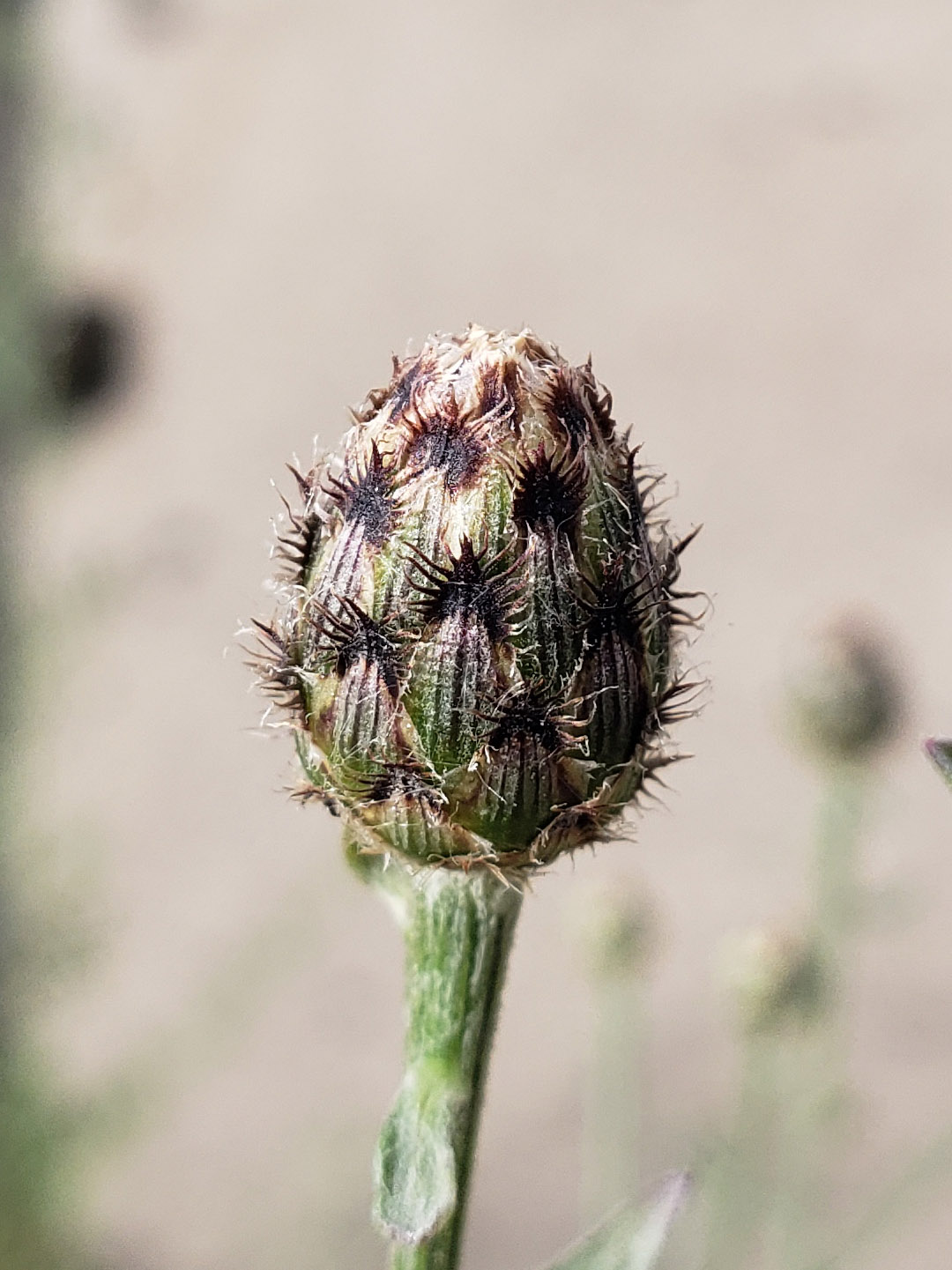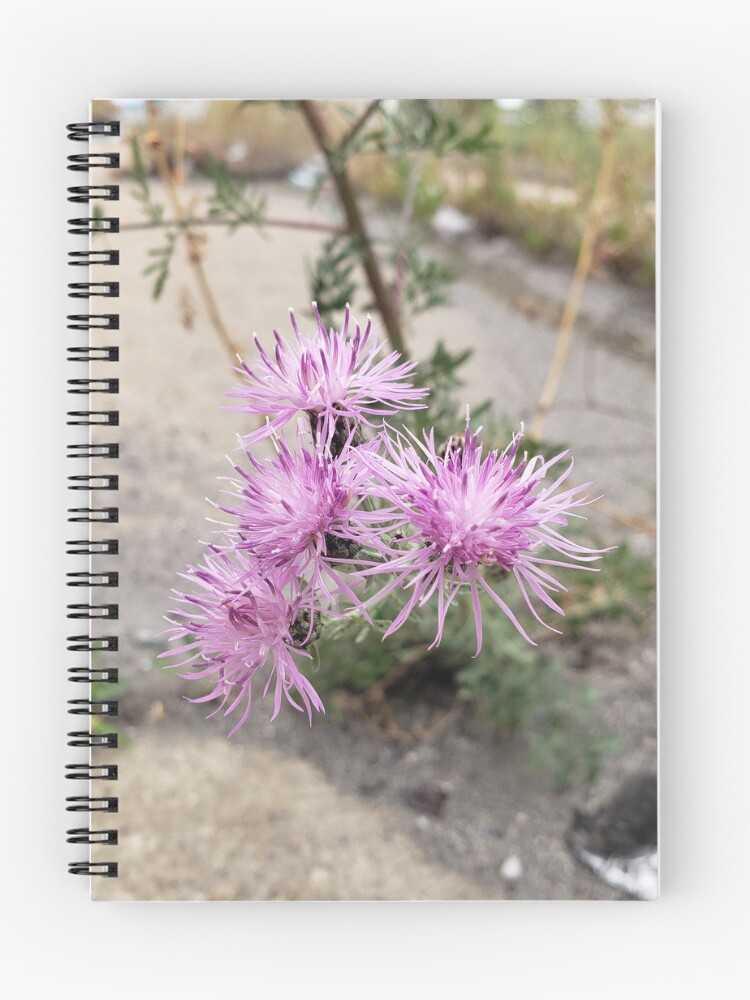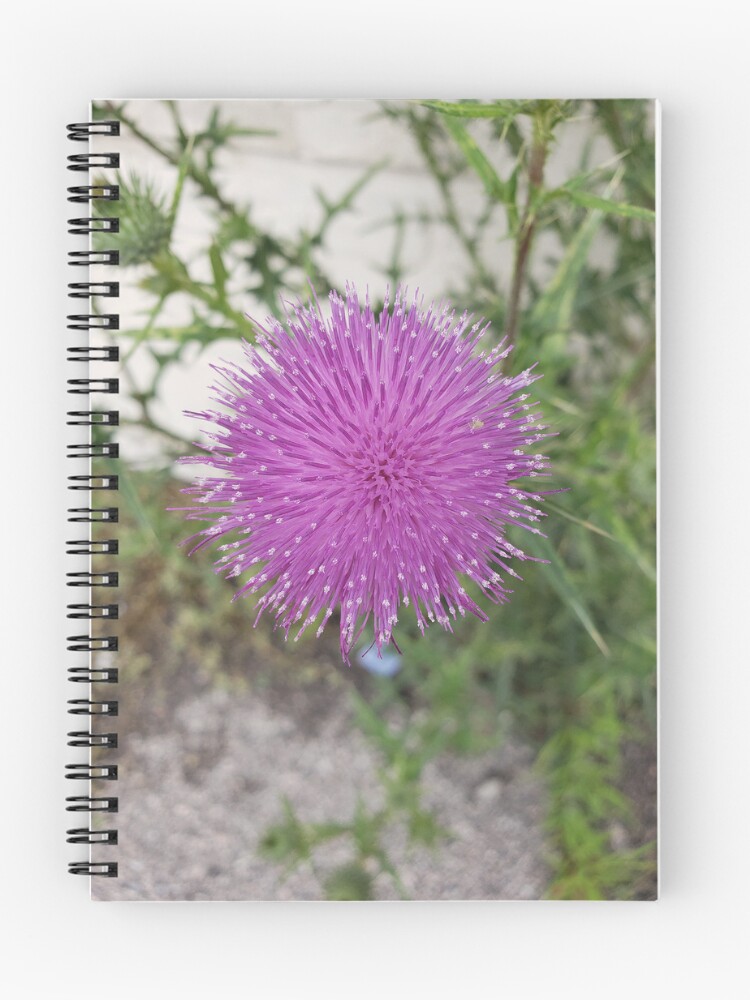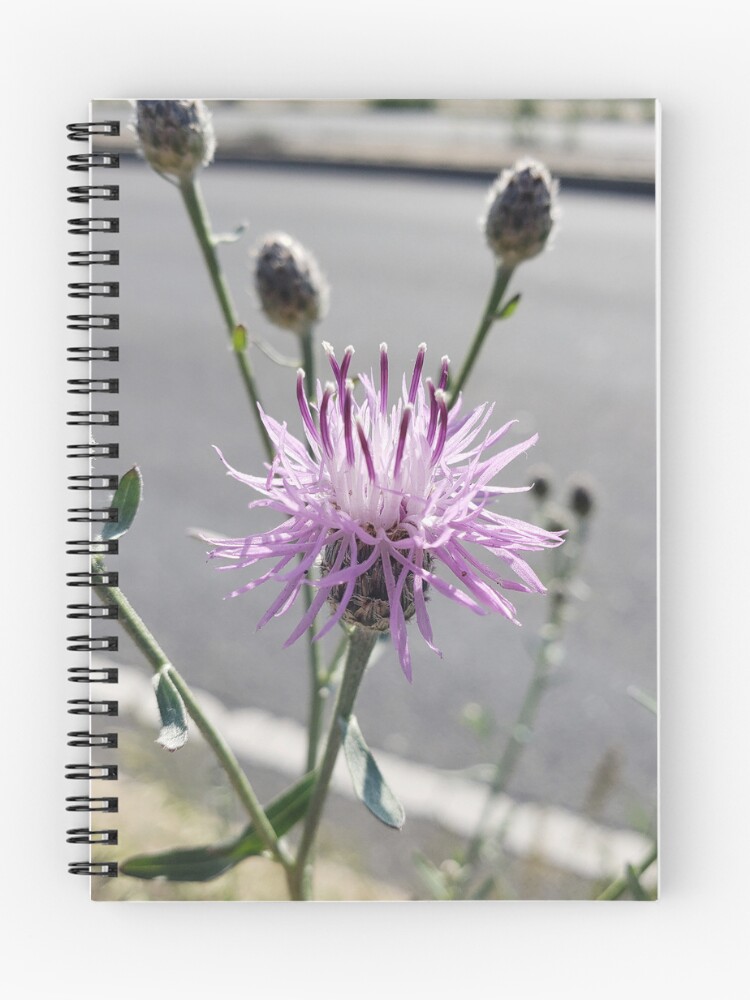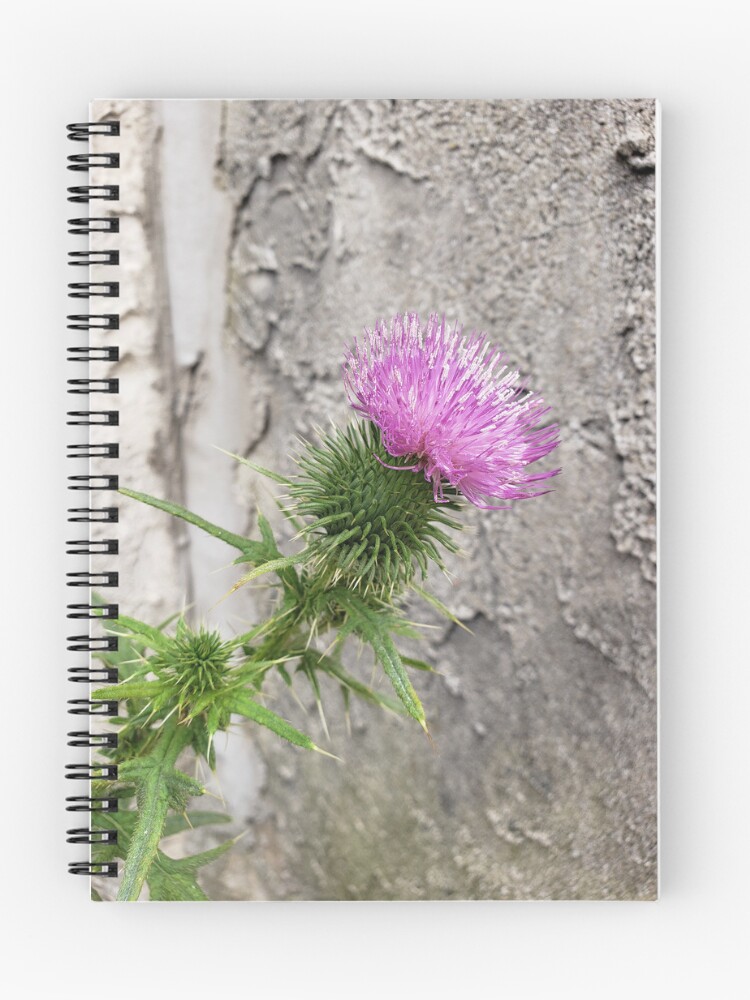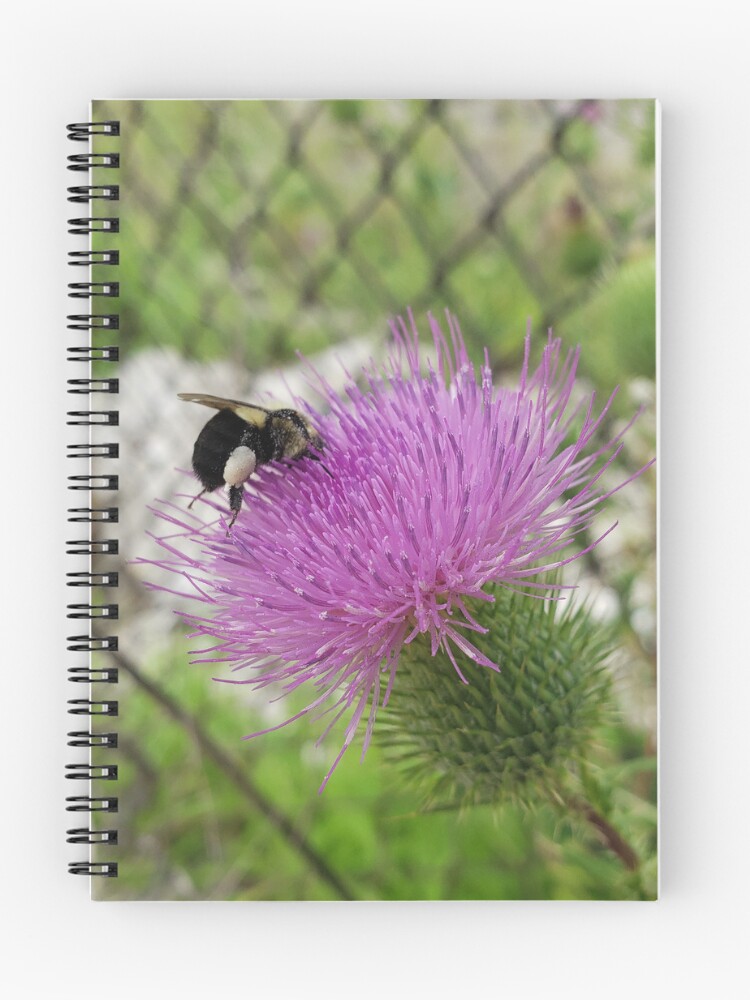
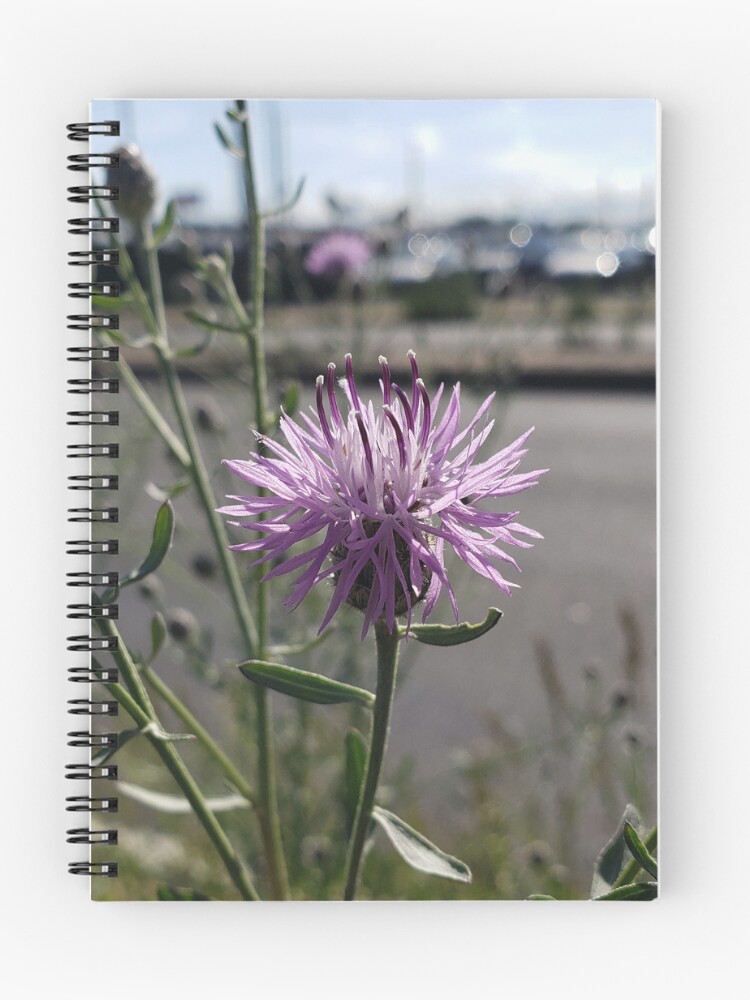
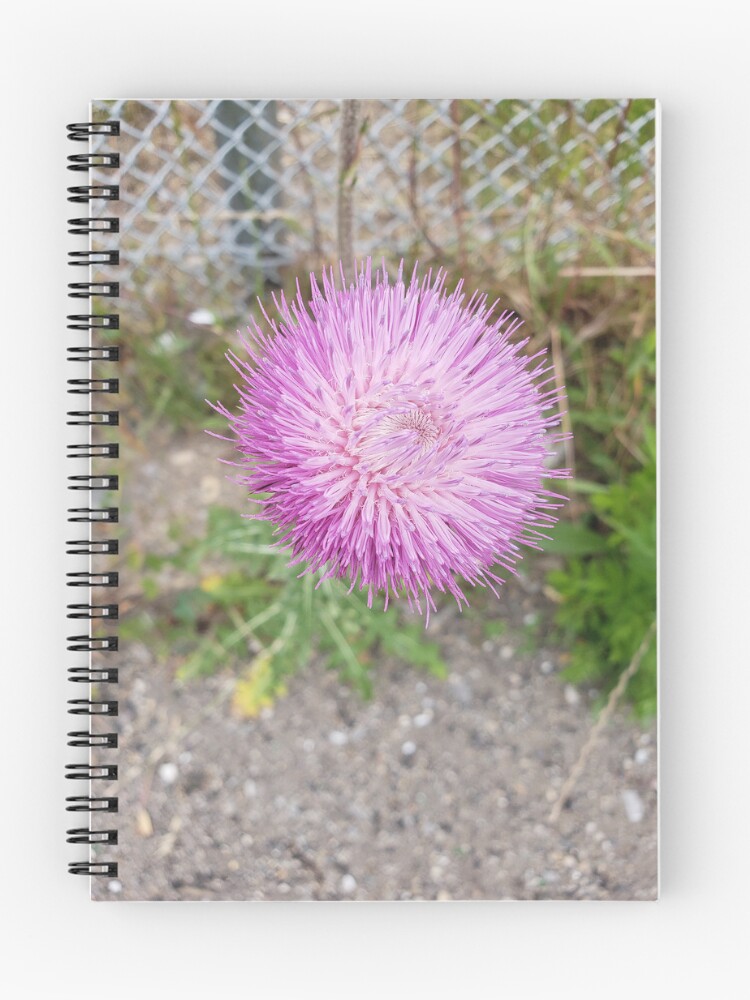
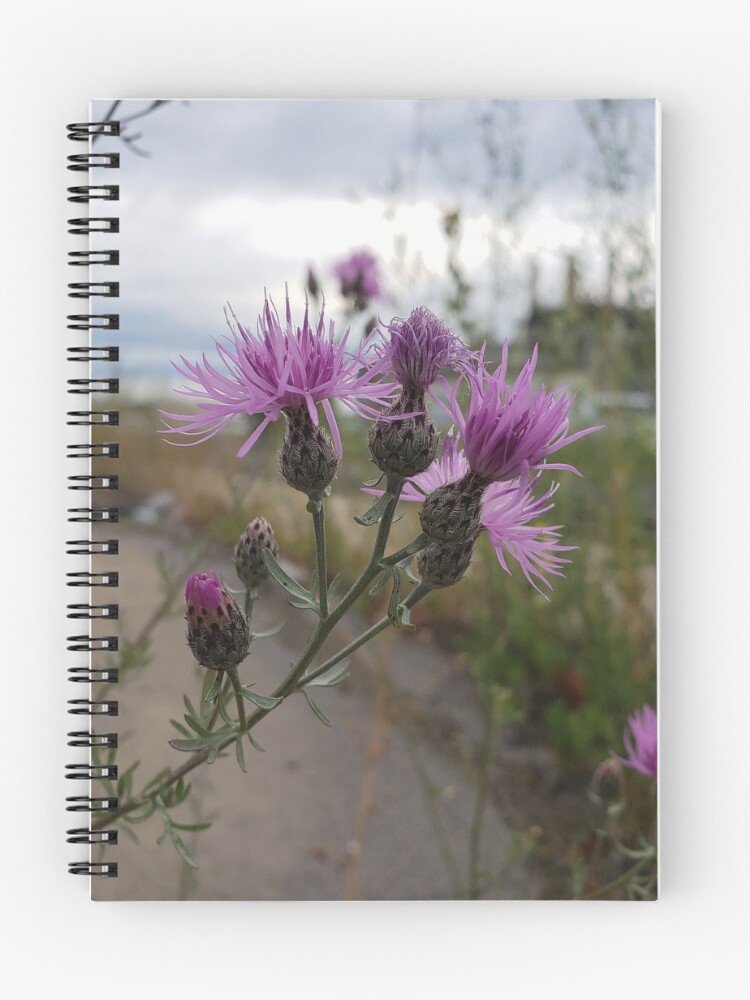
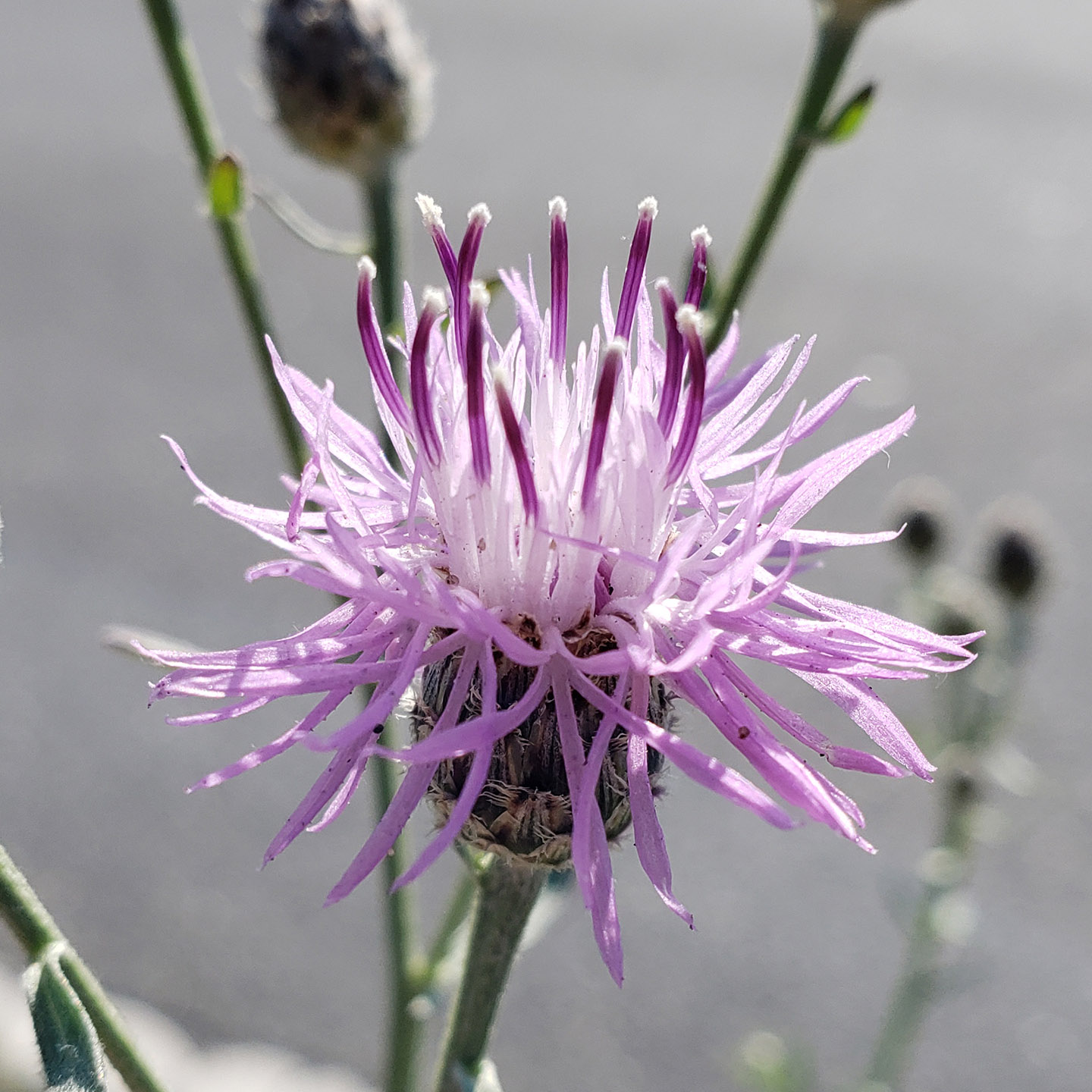
Spotted Knapweed is a Centaurea, which is similar to true thistles such as Cirsiums and Carduus, except without the spines. These are all in the Cardueae tribe of the Asteraceae family, of which the "type genus" is Carduus, as in Musk Thistle. The closest relative one will likely find to it growing about the city is Cornflower (Centaurea cyanis), which can be found as an occasional escaped ornamental, though it was primarily known as a weed in grains, hence its name. Spotted Knapweed is considered to be a highly invasive, noxious weed, but it is a beautiful weed. Even its fancy, grey foliage is attractive well before it flowers and its flowers, while not overly large, are stunning.
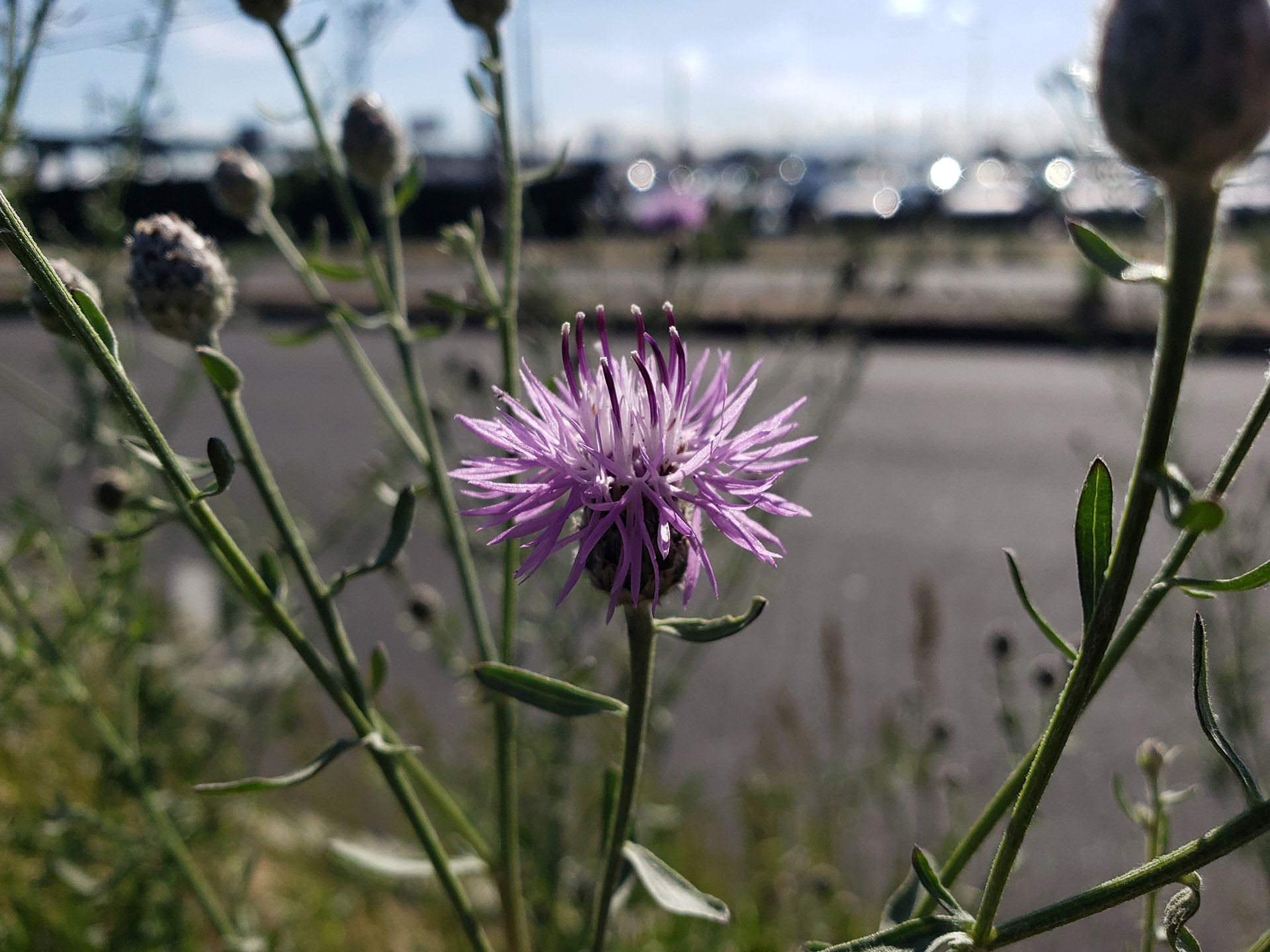
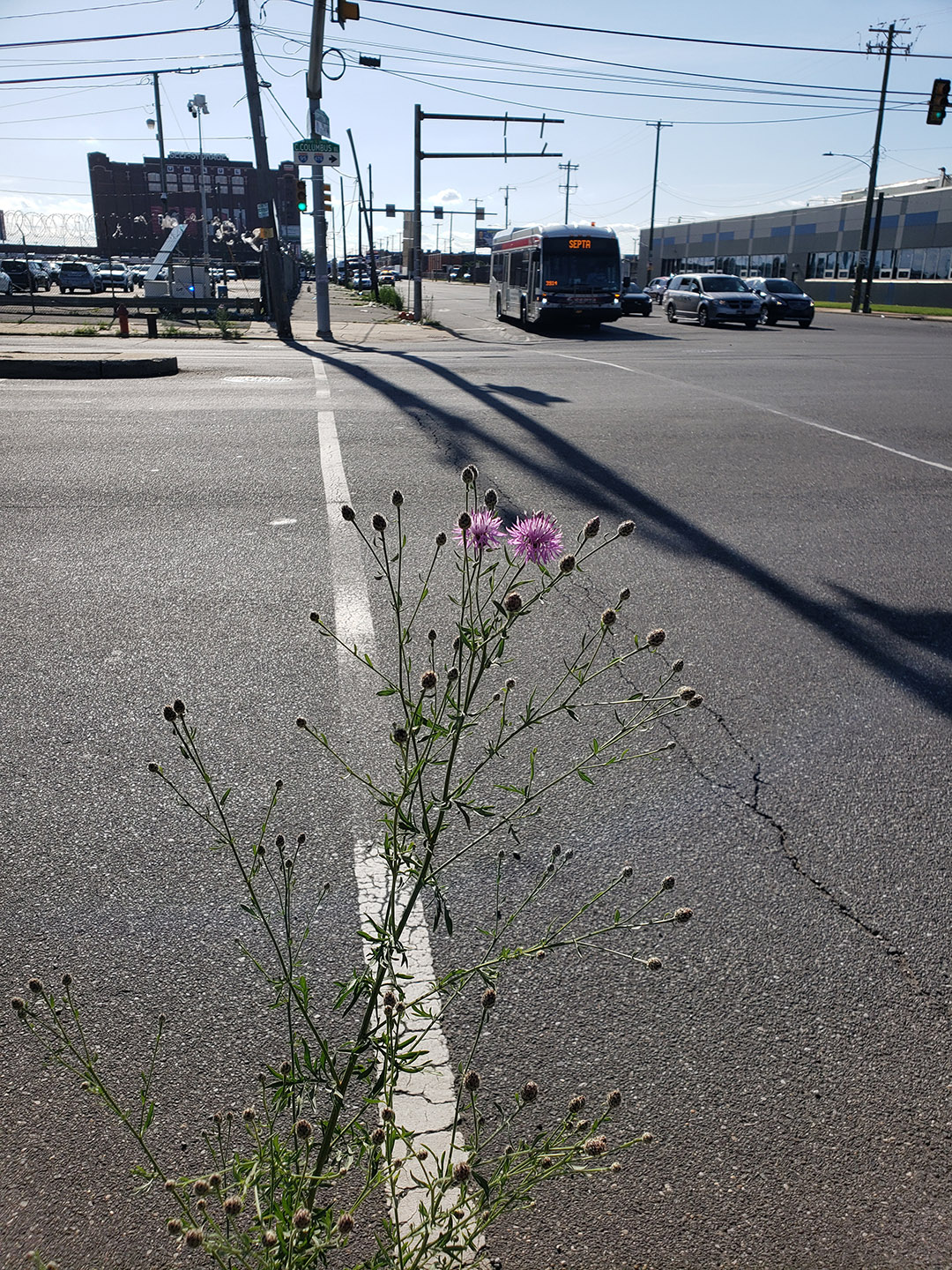
Spotted Knapweed is primarily a non-residential weed. It grows along highways and the riparian zone. The primary spot for the species that I am aware of centers around the area of Columbus Boulevard between Oregon Avenue and the Walt Whitman Bridge. It appears to decrease significantly in population south of the bridge. A significant population maintains along Oregon Avenue on the south side, particularly in the small areas of unkempt dirt. I assume that there are populations between, but I've only rarely seen it in the Navy Yard or FDR Park but it appears now and again along I76 as it hits Vare on the other side of South Philly. Given how high I76 is elevated as it passes over Columbus, I doubt that it was spread down I76 as a highway weed.
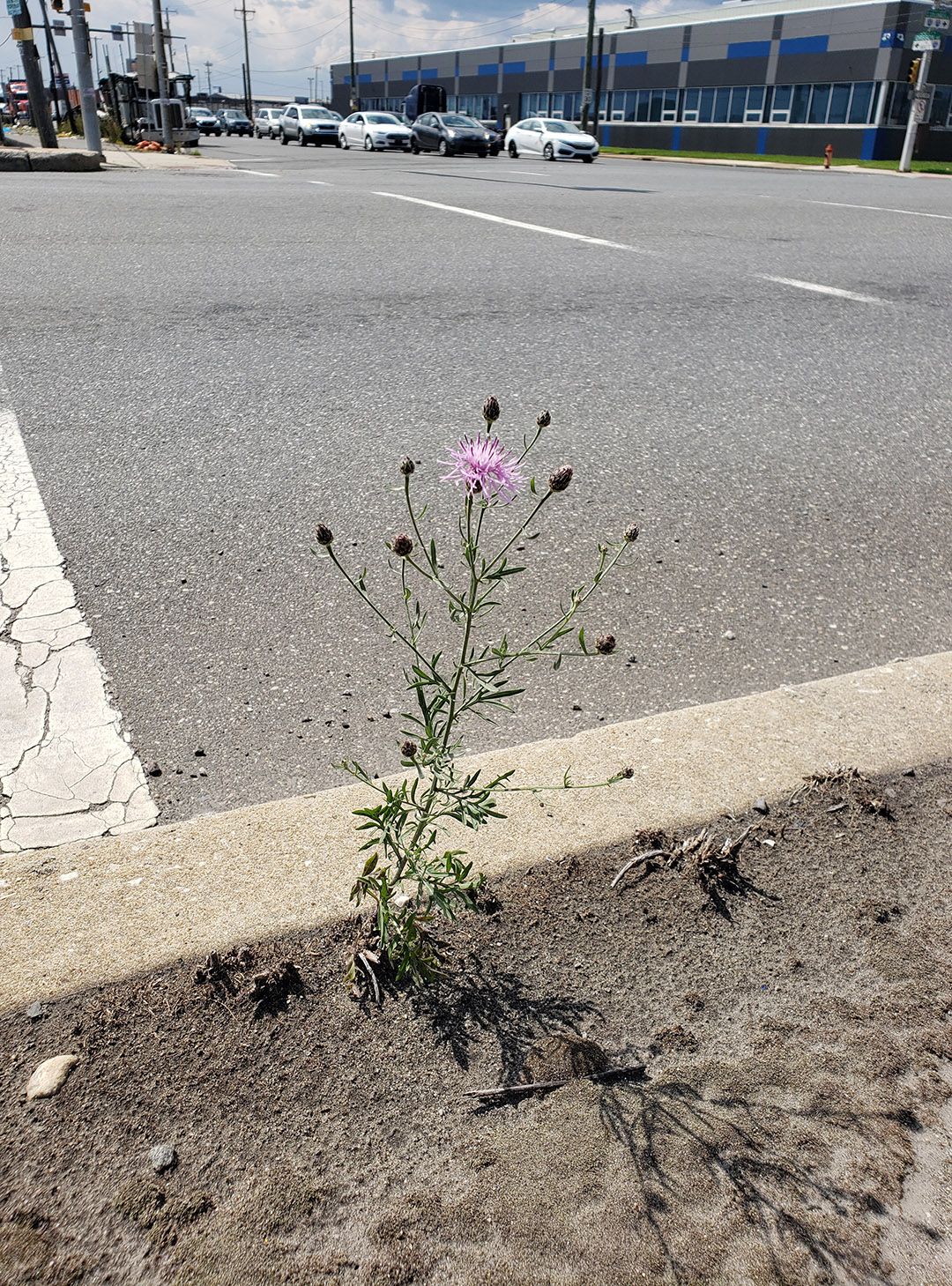
The species used to be much more prevalent along Columbus, growing extensively out of the sidewalks and medians, and the populations used to stretch farther north, fluctuating from year to year. For the last few years, they have started spraying more aggressively, and the population has been mostly beaten back to right around the intersection with Oregon Avenue, and only to the south side. The population along Oregon persists but that is mostly off the sidewalk, with only a few pavementplant specimens appearing every year.
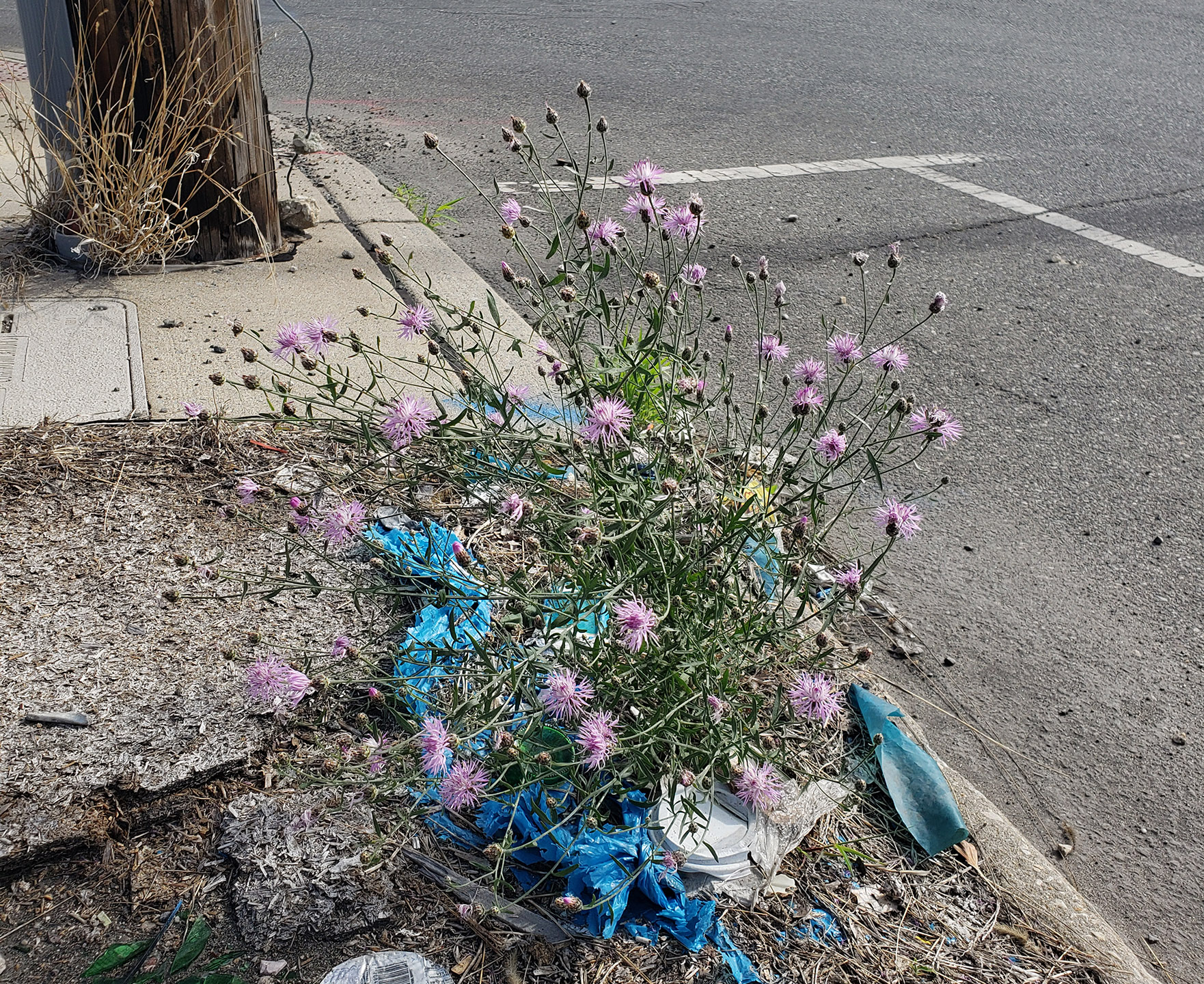
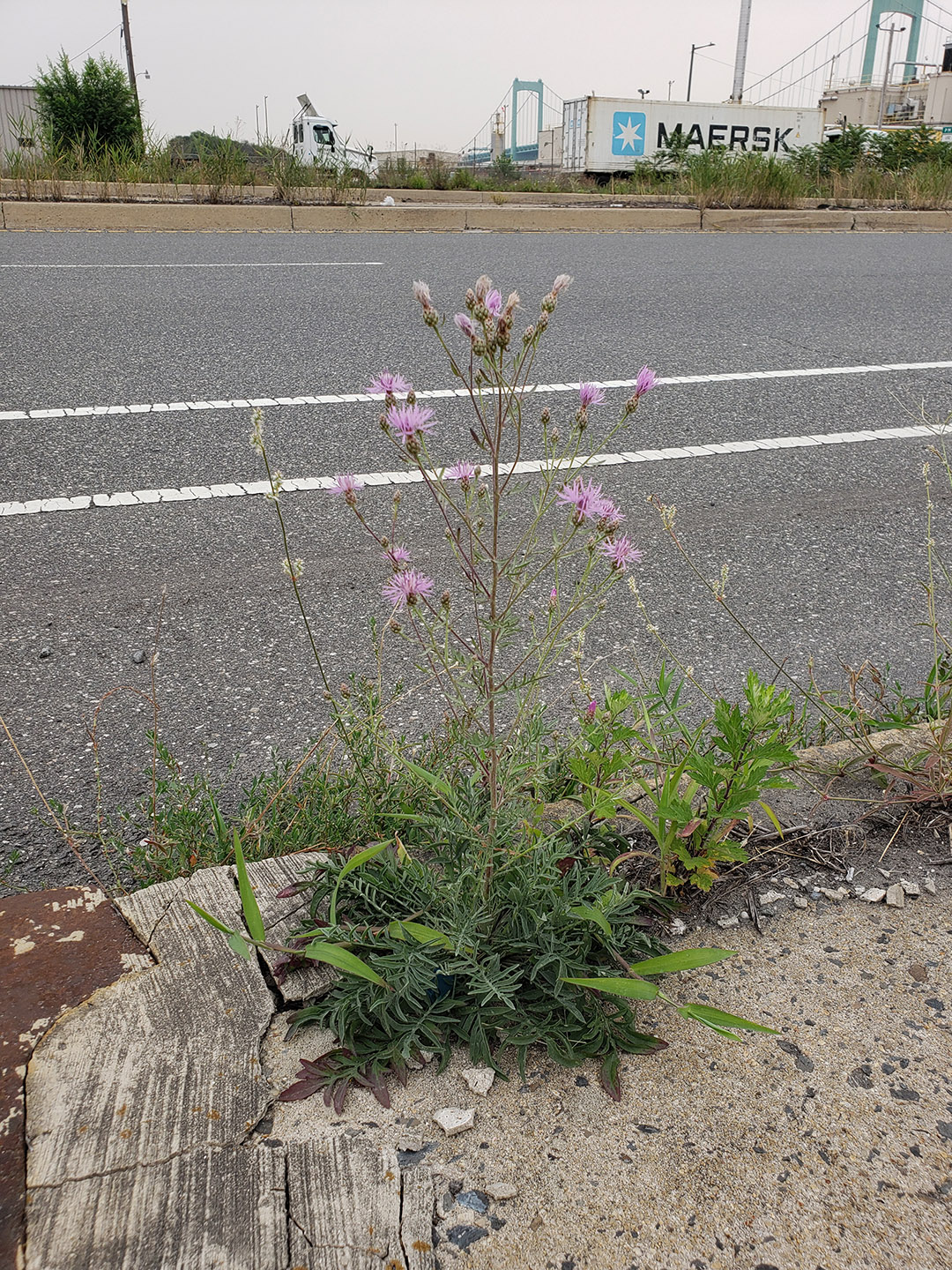
I have spent a lot of time photographing the species along that stretch between Oregon and the Walt Whitman, as can be seen in this gallery series. The best for pretty flower pictures are given in bold. Some of the others focus on off-season features such as rosettes, buds or dessicated remains.
Start: October of 2017
November of 2017
Early June of 2018
June 23rd, 2018 part 1
June 23rd, 2018 part 2
August of 2019
November of 2019 part 1
November of 2019 part 2
January of 2020
May 10th of 2020
May 19th of 2025
May 26th of 2025
June 22nd, 2026
July 5th, 2026
The species does occasionally pop up along the riparian zone of the Delaware River but most of these are in dirt areas and are beyond the scope of these galleries. In March of 2018, however, I spotted some growing out of one of the concrete piers between the "Graffiti Pier" and Penn Treaty Park. I haven't been out that way since and the shots aren't spectacular, having been taken in the winter, but they can be seen in this gallery.
In the last decade, when there were more vacant lots in South Philly, the species could be seen occasionally throughout the area. As far north as Washington Avenue, which marks ten blocks south from Market Street, which runs the middle of Center City, and as central as Broad Street, which runs through the middle of South Philly, there was a rather massive infestation in what was known as the Cirque du Soleil lot, where that circus would set up when it played in Philly.
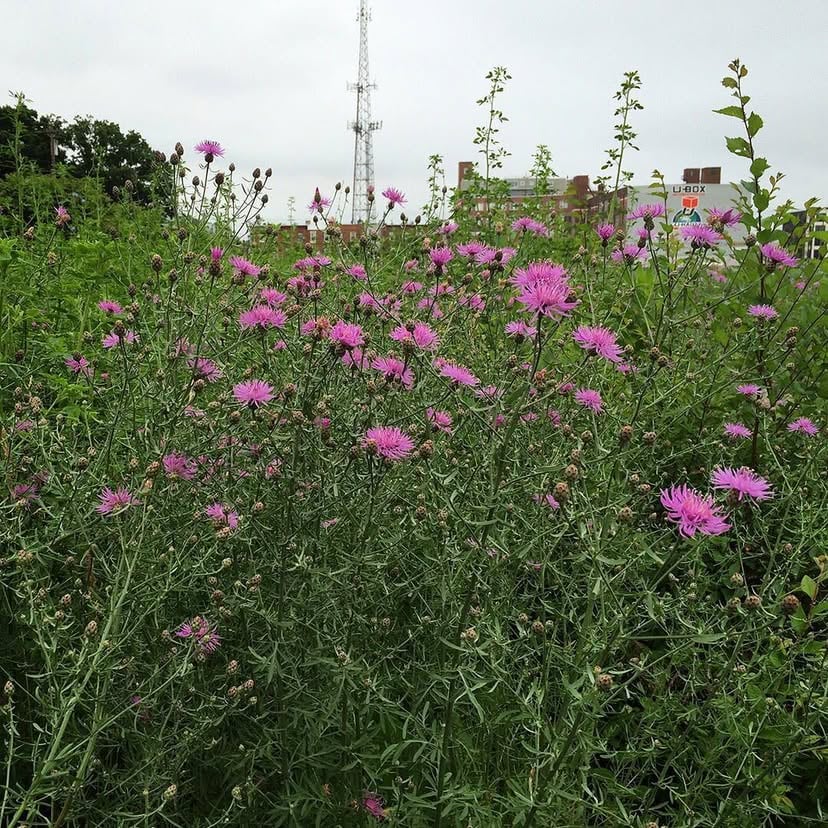
That may look like wildflowers covering a dirt lot, but the area was actually paved. It has now, like most other vacant properties in the area, been built upon. This floral paradise was already paved but they have now put up a 15-story mixed commercial and residential building in its place.
A small gallery with some shots of its former glory can be found here.
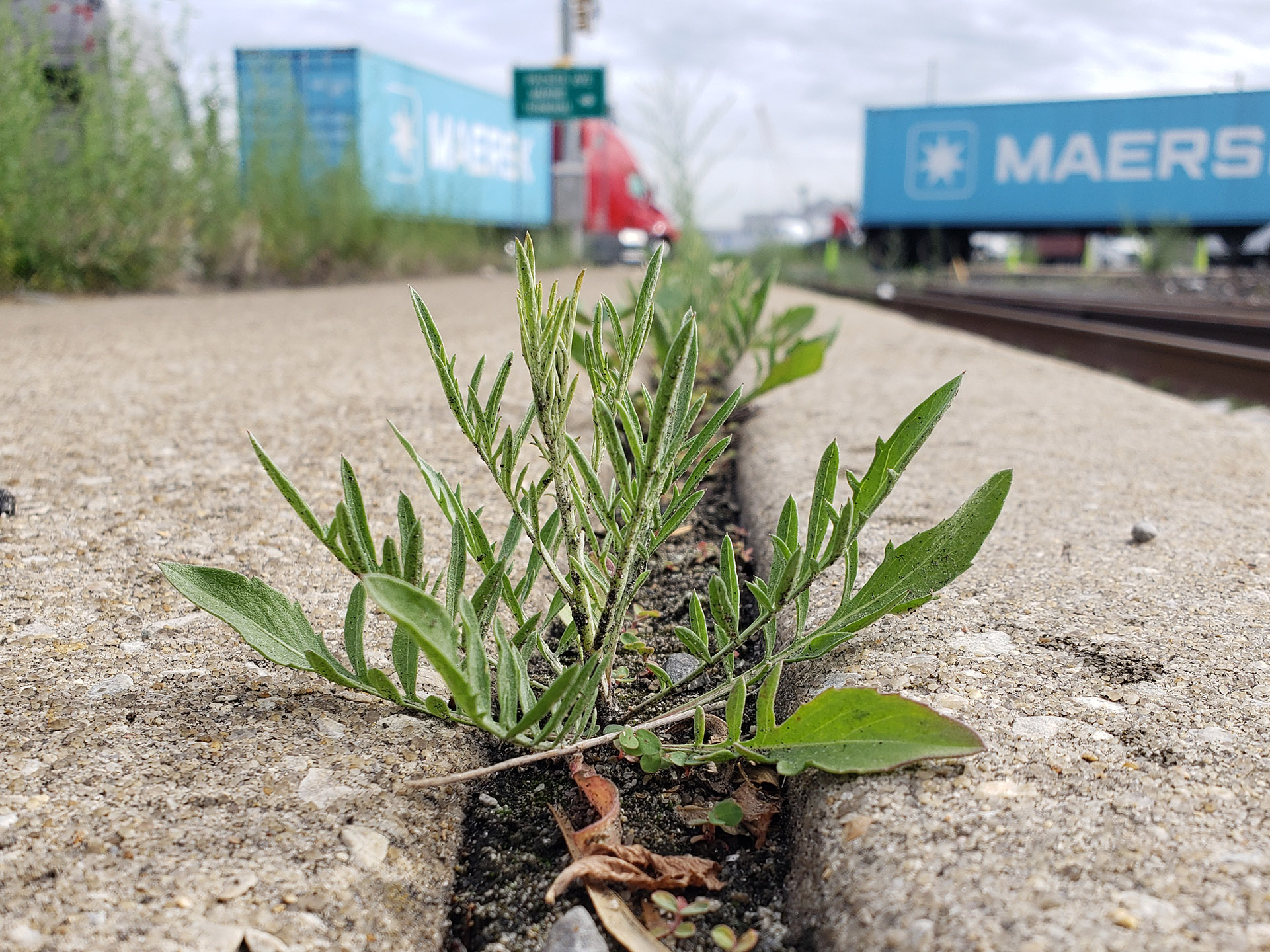
This general trend of disappearing vacant, unkempt spaces has driven many larger wildflower species back to the margins, only occasionally being found more than a couple of blocks from the edges of residential South Philly. When I started analyzing and photographing urban botany, my initial focus was on the then abundant vacant lots. It was almost of necessity that I turned my attention to what could grow out of the pavement. Not only are vacant lots in the gridded areas disappearing, but more areas outside of the grid have been locked off, built up or paved over. One prime example is the space around which Columbus Boulevard curves. When I started, that space was a lichen-encrusted wildflower field with small trees, populated by lots of deer. It has now been almost completely paved over to park new cars unloaded from the docks. This has affected many species, including Sunflowers and Spotted Knapweed. Columbus itself is now regularly sprayed, wreaking havoc on the flora. Along the riparian zone further west, the Navy Yard has been made largely inaccessible to the public. The wilder areas of FDR Park were manicured over in preparation for the FIFA tournament. All of that adds up to more than half of the wilder space I was able to access south of Oregon Avenue, without crossing the Schuylkill, only a decade ago.